Are you looking to create unforgettable family memories in Oahu? Look no further than stand-up paddleboarding (SUP) on the North Shore! It’s an adventure for all ages and skill levels, offering a unique way to experience Hawaii’s stunning coastline. Whether you’re a first-timer looking for a group lesson or seeking a more personalized private session, we’ve got you covered. Thanks to insights and personal experiences from friends and family, this beginner’s guide will help you navigate the best SUP lessons and make the most of your ocean time in paradise.
Key Takeaways:
- Stand-Up Paddleboarding (SUP) is a fun water sport that’s different from traditional surfing, offering a full-body workout with a larger, more stable board that can make it easy for any newbie to glide across the water.
- Oahu’s North Shore is a prime spot for SUP lessons thanks to its calm waters, experienced instructors, and beautiful scenery.
- When choosing a lesson, consider the school’s reputation and the instructor’s qualifications. Look for a structured and safe experience that focuses on technique and safety and can accommodate your experience level.
What is Stand-Up Paddleboarding (SUP)?
Stand-Up Paddleboarding is a water activity that combines elements of surfing and kayaking. It’s a great way to explore Hawaii’s breathtaking coastline while getting a fun, full-body workout.
How is SUP different from other water sports?
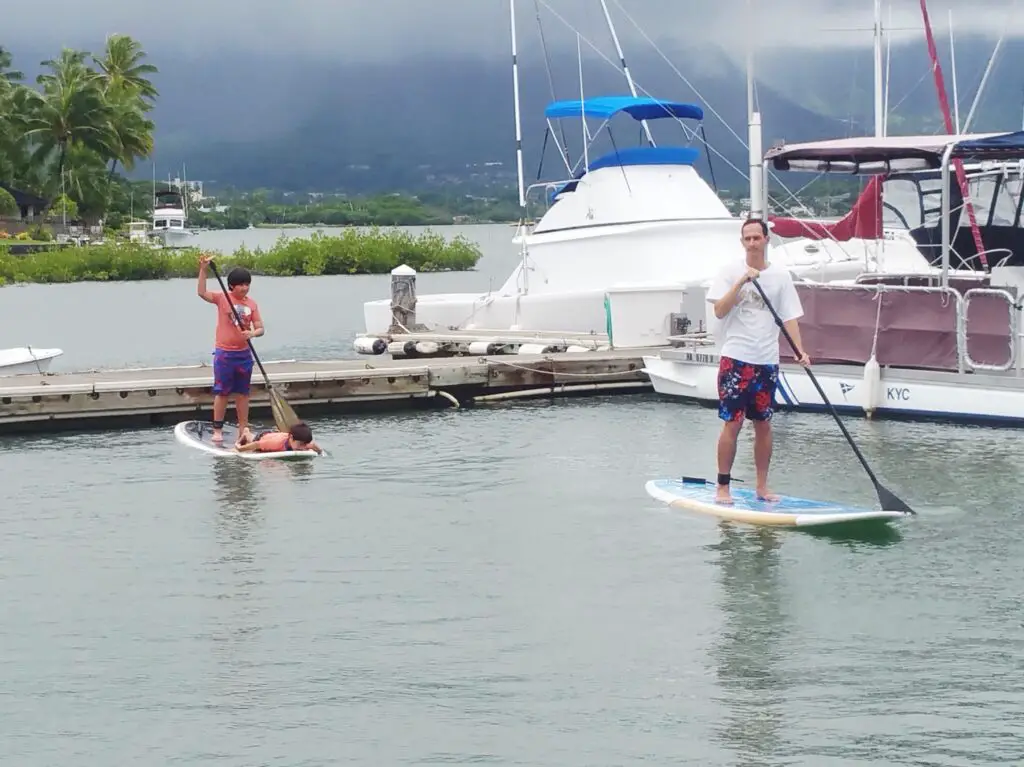
Unlike traditional surfing, which is all about riding waves, SUP lets you paddle across flat water or ride gentle waves while standing on a larger board. This unique approach is excellent for improving your balance and core strength.
You’ll need specific skills and gear depending on where you paddle. For flat water, a wider board provides stability, while a narrower, longer one is better for surfing. Most beginners find that an all-around board (10 to 11 feet long) offers the perfect balance of maneuverability and stability. It’s best to start in calm waters and practice controlling your paddle and shifting your weight before moving on to moderate waves.
What equipment do I need for SUP?
Most SUP companies in Hawaii will provide you with all the equipment you’ll need for your SUP adventure and may even allow you to continue renting the board after your lesson or tour. (Hey, who wants to lug a SUP board through airport baggage check?!) However, if you’re thinking of purchasing your own equipment, you’ll need a paddleboard, a paddle, and reef-safe sunscreen.
By now, most people know that sunscreen in Hawaii is a MUST. While there are some restrictions and recommendations regarding sunscreen types in the Hawaiian Islands, you can find proper sunscreens at most local shops on the North Shore. If you are planning to purchase sunscreen prior to your trip, please check our article on reef-safe sunscreen to help protect our oceans while protecting your skin.
For beginners, an inflatable board is a great option because it’s stable and easy to transport. Adjustable paddles are also a good choice, as they can be used by multiple family members.
Why Choose the North Shore for SUP Lessons?
The North Shore of Oahu is famous for its epic surf, but it’s also a perfect spot for families to learn how to stand-up paddleboard. With stunning scenery and diverse conditions, it’s an ideal place to make some incredible memories.
What makes the North Shore a unique SUP destination?
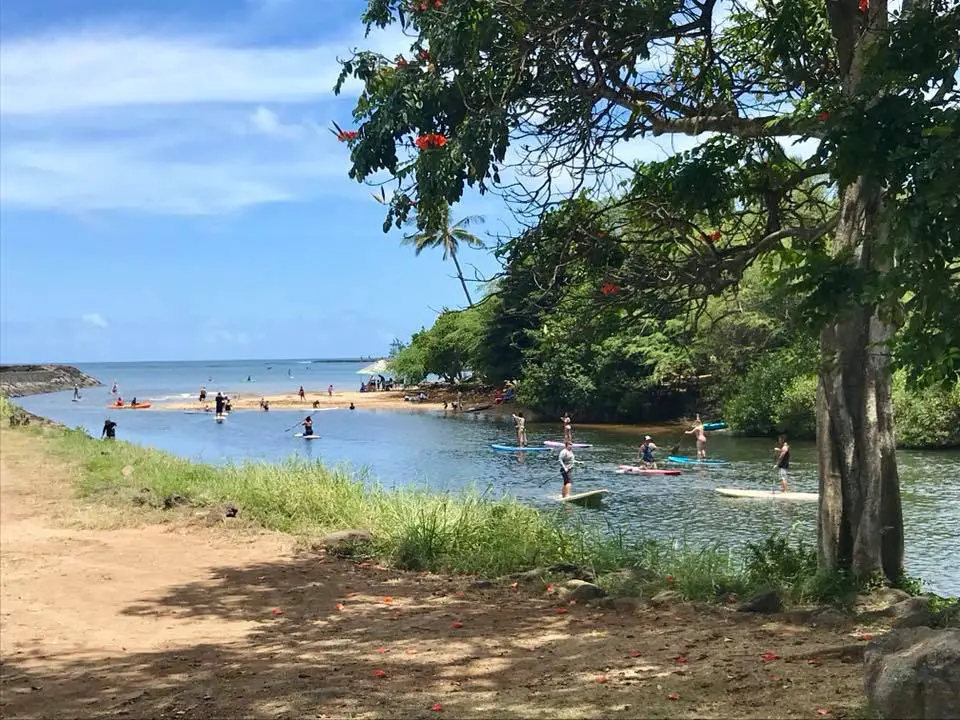
The North Shore’s crystal-clear waters and vibrant marine life make for an unforgettable paddling experience. You’ll be able to spot sea turtles and colorful tropical fish as you glide along the coastline. Waialua Bay is known for its calm waters, making it a great spot for beginners, while the Anahulu River offers a unique exploration experience through its mangrove forests for more experienced paddlers.
Always check local surf reports and tide conditions before you head out. A calm day on the North Shore is perfect for learning and having fun on the water. Plus, make sure you check out Haleiwa Town and Wailua while you’re there!
Are there specific conditions ideal for beginners?
Beginners will have the best experience in calm waters with light winds. The North Shore’s sheltered bays are perfect for mastering the basics. Look for days with wind speeds under 10 mph, wave heights under one foot, and always follow the signs posted at the beach.
Finding the Right SUP Lessons
When you’re looking for SUP lessons on the North Shore, it’s important to find a school that fits your family’s needs. The right instructors should be able to help foster a fun and safe experience for everyone.
What are the best schools for SUP lessons on the North Shore?
There are many great options for SUP lessons on the North Shore, and most offer lessons and tours within a 1.5 to 2-hour time frame. Some things to consider are: how many people you have in your group, their ages, and skill levels, how you plan back and forth from your hotel and the North Shore, and what else you plan to do while on the North Shore.
Here are some highly-rated SUP Lesson and Tour companies on the North Shore.
There are many others as well that offer different kinds of lessons and tours, including sunset SUP and even an after-hours Polynesian Cultural Center tour in shallow water! If you do your own searches, make sure to check the locations prior to booking – I’ve noticed some of the search results don’t stay within the correct location.
How do I choose a lesson based on my skill level?
One nice thing about SUP on Oahu is that most companies are very experienced working with a variety of skill levels. If you have specialized concerns, I recommend contacting the company in advance; however, the boards are wide enough that most people get the hang of the basics pretty quickly.
What should I look for in a qualified instructor?
While Hawaii doesn’t require SUP instructors to have certifications, most do. Outside of certification, I think a great SUP instructor should be very familiar with the local water conditions and have a knack for teaching both kids and adults. A low instructor-to-student ratio (around 1:4) is ideal for a first lesson as it ensures you get plenty of personal attention; however, it may not work if your group is larger than four or if they have their own ideal group sizes. Most lessons and tours cap at 10-12 people.
What to Expect During Your SUP Lesson
Knowing what to expect can help you feel more confident and prepared for your first SUP lesson. Most lessons follow a simple structure that gets you comfortable on land before you hit the water.
What is the typical structure of a SUP lesson?
Most lessons start with a quick safety briefing, when the instructor will cover important topics like water safety, staying hydrated, and some of the marine life you can expect to encounter. Next, you’ll probably spend some time on land learning basic paddle strokes and balance techniques. Once you’ve got the basics down, you’ll get to practice on the water with real-time feedback from your instructor. This approach helps you build confidence and master the essential skills before you’re on your own.
How long do lessons usually last?
Standard SUP lessons typically last between 1.5 and 2 hours, which gives you plenty of time for both instruction and practice. Small groups often get more personalized feedback, while larger groups may take a little longer to ensure everyone gets enough attention. On windy days, a shorter lesson might be best to focus on safety and foundational skills.
Many places allow you to continue renting your paddleboard after the lesson is over, but check with the company you book with, as well as if there are any additional fees.
What safety measures are in place for beginners?
Your safety is the top priority during any SUP lesson. While life jackets are not required in Hawaii, they should be available upon request. Most lessons include safety drills where you practice things like falling off and getting back on your board. Having experienced instructors ensures that they are well-equipped to assist individuals who require additional guidance.
Essential Tips for First-Time SUP Participants
A little preparation can go a long way in making your first SUP experience a success. Here are some tips to help you get ready to have a blast on the water!
What should I wear for my SUP lesson?
Honestly, a swimsuit or clothes that can get wet, reef-safe sunscreen, and a (reusable) bottle of water are pretty much all you need for your SUP lesson. However, if you’re like my Mom and love any excuse to get new gear – or if you burn easily and need more sun protection – you can also consider: a UV-protective surf shirt for added sun protection, a lightweight waterproof bag to keep your belongings dry, water shoes with good grip so you don’t step on anything surprising, a wide-brimmed hat to provide some additional sun protection, and polarized sunglasses to keep the ocean glare out of your eyes.
Actually, if you have a shaved head, thinning hair, or a haircut that shows a lot of scalp, I would highly recommend wearing a hat to protect your scalp from getting sunburned. At least remember to apply sunscreen to the back of your neck and top of your head ~ no one wants a blistered or peeling scalp from a sunburnt head😓.
How can I prepare physically for my first lesson?
I don’t feel like you have to be in prime physical shape for your SUP lesson. In Hawaii, I’m sure they are used to providing lessons for a variety of physical conditions. However, if you would like to prepare for your SUP experience, focus on exercises that build your core strength and balance, such as these simple moves:
- Do a five-minute warm-up with arm circles and leg swings.
- Practice planks for 30 seconds to one minute to engage your core.
- Stand on one leg for 30 seconds at a time to improve your balance.
- Gently stretch your hamstrings and quads to boost flexibility.
These exercises may help your body feel ready and boost your confidence on the water.
Exploring the North Shore Beyond SUP
After your lesson, you’ll want to explore everything else the North Shore has to offer. Some companies offer a variety of tours as part of the SUP lesson. In addition, there are plenty of other activities and delicious local food spots to check out! Make sure you make time to visit a few places before heading back to your hotel. Please also note that if you are using a ride-share, know when they are available for pick-up and if they have any blackout times. Due to Oahu’s morning and evening traffic, not all ride-share drivers are willing to go back and forth across the island during peak traffic times or late in the evenings.
What family-friendly activities can we do after our lesson?
Once you’re done paddling, check out Haleiwa Town for local shops and a variety of restaurants, visit a historic sugar plantation in Waialua, snorkel with sea turtles at Shark’s Cove, or explore the beautiful trails and botanical gardens at Waimea Valley. The famous food trucks in Haleiwa are usually a must-try stop! Grab some garlic shrimp, a refreshing acai bowl, or some local shave ice. These activities are a great way to experience the unique charm and culture of the North Shore.
If you have a rental car, consider driving further east toward Laie toward the Polynesian Cultural Center for dinner and an evening show. The Polynesian Cultural Center also hosts an after-hours family-friendly stand-up paddling tour around the center, but you’ll need to book in advance.
Are there nearby beaches that are great for SUP practice?
Once you’ve got the basics down, you can practice your new skills at several nearby beaches. Waialua Bay is a fantastic spot with calm waters perfect for a relaxing paddle. For a little more of a challenge, try Lanikai Beach on the Windward side of Oahu, which has slightly stronger currents. Always check the weather conditions and tides before you go, and use apps like Windy or Surfline to find the best conditions for a safe and fun day on the water.
What dining options are available for families on the North Shore?
The North Shore has a wide variety of dining options for families. For a casual bite, the food trucks in Haleiwa are a must-try. Other great options in Haleiwa are Haleiwa Beach House, Seven Brothers, or Haleiwa Joe’s. If you’re celebrating a special day, Paakai at Turtle Bay Resort (further north in Kahuku) offers incredible ocean views and a gourmet menu. No matter where you go, you’ll find a welcoming environment and delicious local food!

Understanding Local SUP Etiquette
Paddling in Hawaii is not just about having fun; it’s also about respecting the local environment and others on the water. Following a few simple rules will ensure everyone has a safe and enjoyable experience.
What are the basic rules of the water for SUP?
When you’re on the water, you should always give way to swimmers, stay clear of surf zones, and keep a safe distance from marine wildlife. Be respectful of other paddlers by not overcrowding the area. For example, if you see a group of kayakers, paddle around them instead of through them. And always check for local regulations on protected marine areas—disregarding these rules can harm wildlife and lead to hefty fines and/or jail time. Communicating with others on the water makes it a safer and more enjoyable experience for everyone.
How do I respect the environment while paddleboarding?
To protect Hawaii’s fragile aquatic ecosystems, it’s essential to use reef-safe sunscreen and avoid disturbing marine life. Choose eco-friendly paddleboards made from sustainable materials if possible, always use a reusable water bottle, and never leave any trash behind. Stick to designated routes to avoid sensitive habitats, and do not touch or go near endangered wildlife such as sea turtles or Hawaiian monk seals.
Frequently Asked Questions (FAQs) about SUP on the North Shore
Got more questions? We’ve got answers! Here are some of the most common questions about SUP lessons on the North Shore.
What is the best time of year for SUP lessons?
The best time for SUP lessons in Hawaii is from late spring to early fall (May to October). During these months, the weather is calm and the water temperatures are warm and pleasant. Wave heights are generally manageable (1 to 3 feet), which is perfect for beginners. September and October are great as the crowds start to thin out and conditions are still fantastic.
Are there age restrictions for SUP lessons?
Most SUP schools on the North Shore welcome kids as young as five years old and offer family-friendly lessons. Instructors can often split the group based on age and skill level, so everyone gets personalized attention. Most companies on the North Shore are able to accommodate a variety of ages and skill levels; however, if you have any concerns or specific needs, just contact them prior to booking.
What should I do if I feel uncomfortable on the water?
It’s totally normal to feel a little nervous. If you start to feel uncomfortable, the most important thing is to let your instructor know immediately. Practice some deep breathing to calm your nerves, and if you need to, start with shorter sessions in calmer waters. Overcoming discomfort takes time, so be patient with yourself and communicate with your instructor.
Ready for Your Hawaii Family Adventure?
Hopefully, now that you know what to expect, you’ll be ready to book your SUP lesson and create some lasting family memories. The North Shore is waiting for you with its beautiful scenery and welcoming spirit. Just remember to book ahead, be open to learning, and, most importantly, have fun! Your family’s next great adventure is just a paddle away.
“`